Coffee Shop Equipment Guide: How to Choose Commercial Equipment That Pays for Itself
The right coffee equipment does more than make better drinks — it keeps your bar moving, reduces downtime, controls costs, and helps your café deliver consistent quality every day. Learn what matters when choosing commercial espresso machines, grinders, and café equipment.
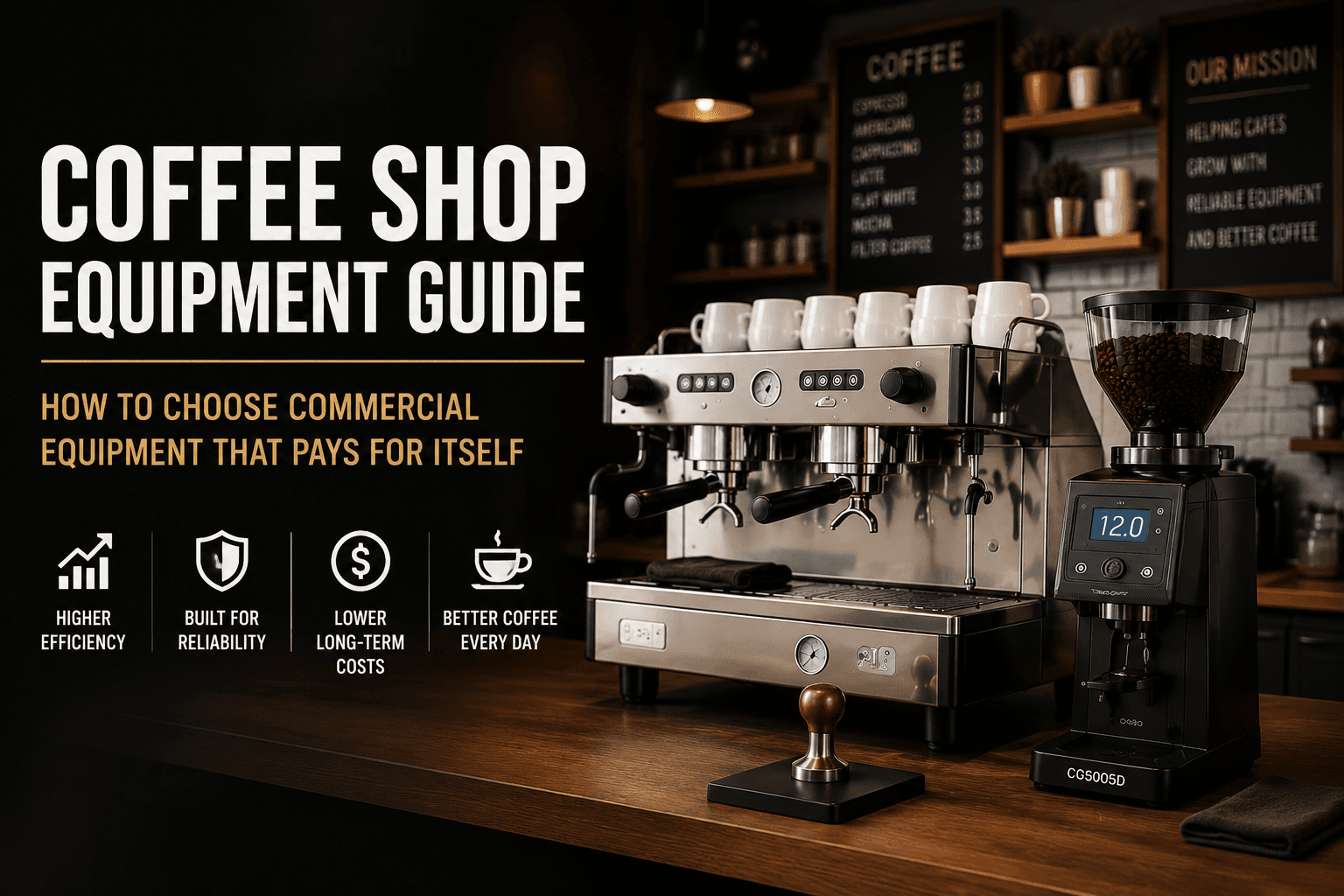
Coffee Shop Equipment Guide: How to Choose Commercial Equipment That Pays for Itself
Opening a café is exciting, but choosing the wrong equipment can become one of the most expensive mistakes a business owner makes.
A commercial espresso machine or grinder is not just another purchase — it is the foundation of your daily operation. The right equipment improves workflow, protects drink quality, reduces maintenance costs, and helps your team serve more customers during busy hours.
This guide explains what café owners should consider before investing in commercial coffee equipment.
1. Start With Your Café's Volume and Menu
The best equipment depends on how your café operates.
Before comparing machines and grinders, understand:
- How many espresso drinks you expect to serve daily
- Your busiest service periods
- Whether you focus on espresso, milk drinks, specialty coffee, or high-volume takeaway orders
- Future growth plans
A small café serving 50 drinks per day has different requirements than a busy location serving 300+ drinks daily.
Choosing equipment based only on price can create problems later. An undersized machine may struggle during peak hours, while oversized equipment can waste energy and budget.
2. Focus on Total Cost of Ownership
The cheapest machine is rarely the cheapest option long term.
When evaluating commercial coffee equipment, consider:
Initial Purchase Price
The upfront cost matters, but it is only one part of the investment.
Maintenance Costs
Look at:
- Availability of replacement parts
- Ease of servicing
- Manufacturer support
- Warranty coverage
Equipment Lifespan
A reliable grinder or espresso machine can operate for years when properly maintained.
Downtime Risk
Every hour your equipment is unavailable can mean lost sales and unhappy customers.
A slightly higher-quality machine can often pay for itself through reliability and consistent performance.
3. The Grinder Is Just as Important as the Espresso Machine
Many new café owners spend most of their budget on the espresso machine and underestimate the grinder.
The grinder controls:
- Extraction consistency
- Flavor quality
- Shot-to-shot repeatability
- Barista workflow speed
A commercial grinder should provide:
- Consistent burr performance
- Precise grind adjustment
- Reliable motor performance
- Fast grinding during busy periods
For high-volume cafés, investing in a dependable grinder is one of the smartest equipment decisions you can make.
4. Choose Equipment Built for Daily Commercial Use
Home equipment and commercial equipment are designed for completely different workloads.
Commercial café equipment should handle:
- Continuous daily operation
- Multiple baristas using the machine
- High-temperature environments
- Hundreds of drink cycles
Look for features such as:
- Commercial-grade motors
- Durable materials
- Replaceable components
- Certified manufacturing standards
- Strong supplier support
Reliability matters more than having every possible feature.
5. Consider Workflow and Bar Layout
Great equipment only works when it fits your café workflow.
Think about:
- Counter space
- Staff movement
- Grinder placement
- Cleaning access
- Customer ordering flow
A well-designed bar setup saves seconds on every drink. Over hundreds of drinks per day, those seconds become hours of saved labor.
6. Certifications and Documentation Matter
Commercial buyers should always verify equipment documentation.
Important certifications may include:
- CE
- RoHS
- EMC
- ISO 9001
- CB
- UL
- NSF
Certifications help confirm that equipment has been tested against recognized safety and quality standards.
Always request official documentation from suppliers before making large equipment purchases.
7. Work With Suppliers Who Understand Cafés
Buying commercial equipment is not only about receiving a product.
A reliable supplier should provide:
- Clear specifications
- Certification documentation
- Transparent pricing
- Replacement parts availability
- After-sales support
Factory-direct sourcing can help cafés access professional equipment without unnecessary distributor markups, but verification and quality checks are essential.
Final Thoughts
Your coffee equipment is one of the most important investments your café will make.
The goal is not simply buying the cheapest machine or the machine with the most features. The goal is choosing equipment that supports your workflow, maintains quality, and continues performing during your busiest hours.
A reliable espresso machine and grinder become the foundation of your café's reputation — helping you serve better coffee, reduce operational problems, and grow with confidence.
At Roast & Recover, we help cafés find commercial coffee equipment built for real-world daily service.
Atif Shafique
Roast & Recover
Ready to source direct?
Browse certified equipment and packaging, direct from source.